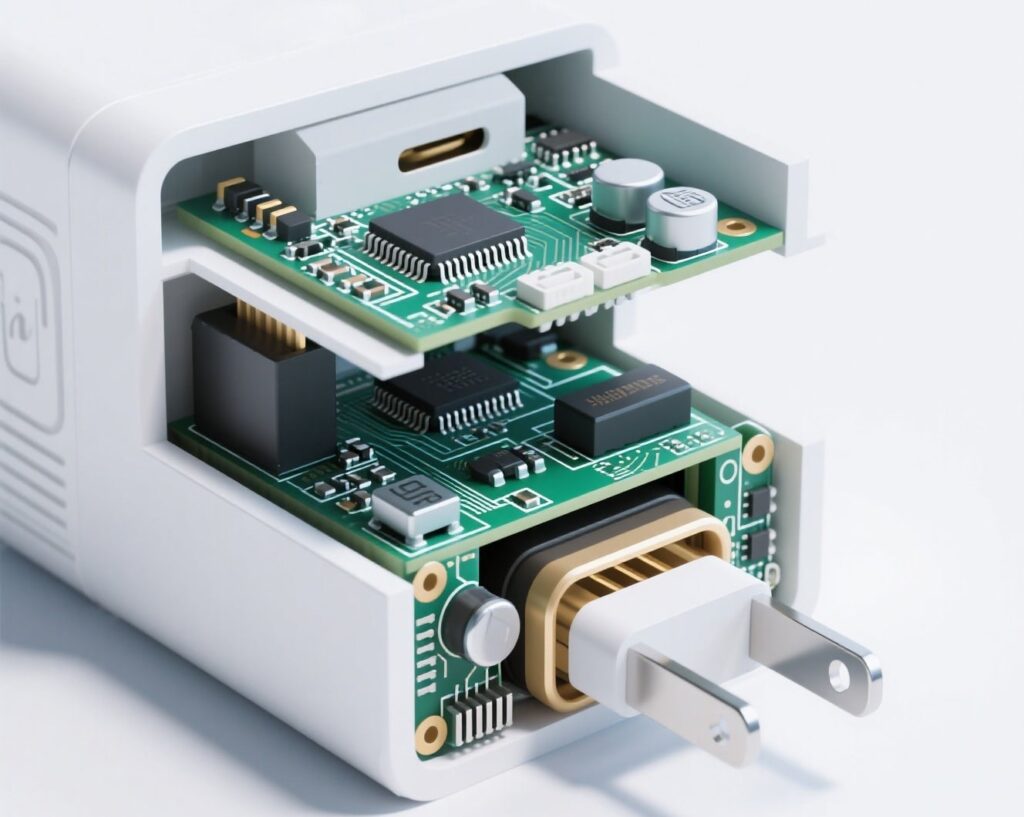
The Ultimate Guide to Buying the Best Travel Charger for Phones and Laptops in 2026

Gan Travel Chargers

Gan Travel Chargers

Introduction: Why Your Old Travel Charger Isn’t Cut Out for Travel

Picture this: You’re in a crowded airport during a layover, your laptop battery is at 5%, and your phone isn’t far behind. You scramble for an outlet, only to find you’ve packed a tangle of slow, bulky travel chargers that take forever to power one device, let alone all of them. This modern travel nightmare is entirely avoidable.

The right travel charger is no longer a luxury; it’s a necessity. It’s the command center for your digital life on the road, capable of juicing up your smartphone, laptop, tablet, and headphones simultaneously, quickly, and safely—all from a single, compact device that fits in your pocket.

This comprehensive guide will walk you through everything you need to know to invest in a perfect travel charger for your needs, covering key specs, crucial features, and top recommendations to ensure you never face a dead device again.

Chapter 1: Understanding the Core Specifications of Travel Charger

Before you buy, you need to speak the language. These technical terms define a charger’s capability.

1. Wattage (W): The Powerhouse Metric

Wattage is the most critical factor determining charging speed. Simply put, higher wattage = faster charging, but only if your device can handle it.

  • Phones (iOS & Android): Most modern smartphones support fast charging between 20W and 45W. A 20W charger will fill an iPhone much faster than the old 5W brick.

  • Tablets: Typically require 30W to 45W for optimal charging.

  • Laptops: This is where power needs jump. Most modern ultrabooks (MacBook Air, Dell XPS 13) need at least 45W-65W. Larger notebooks and gaming laptops may require 100W or more.

Pro Tip: For a future-proof charger that can handle a laptop and other devices, aim for a minimum of 65W. If you’re a power user with a high-performance laptop, look for 100W+.

2. USB Power Delivery (PD): The Universal Fast-Charging Standard

USB Power Delivery (USB-PD) is a universal fast-charging protocol that allows for higher power transfer over USB-C connections. It’s what enables a small charger to power a large laptop.

  • Why it matters: USB-PD is the standard for modern MacBooks, Windows ultrabooks, iPads, and high-end Android phones. If your charger and device both support USB-PD, they will negotiate the fastest possible charging speed.

  • Look for it: Ensure any charger you buy prominently features “USB Power Delivery” support.

3. Ports: Quantity and Type

The number and type of ports determine how many devices you can charge at once.

  • USB-C Ports: These are essential. Look for chargers with multiple USB-C ports, as they are used for high-speed data transfer and high-wattage charging. This is where your laptop will plug in.

  • USB-A Ports: While older, these are still useful for charging older devices like Bluetooth headphones, some fitness trackers, or for using older cables. A good travel charger should have at least one.

Aim for a charger with 2-3 ports minimum (e.g., 2x USB-C + 1x USB-A) to avoid carrying multiple chargers.

Chapter 2: Must-Have Features for the Modern Traveler

Beyond the basic specs, these features separate good chargers from great ones.

1. GaN Technology: Smaller, Cooler, and More Efficient

Gallium Nitride (GaN) is a revolutionary semiconductor material that has transformed charger design.

  • Smaller Size: GaN chargers are significantly smaller and lighter than traditional silicon-based chargers with the same power output. This is a game-changer for travel.

  • Greater Efficiency: They waste less energy as heat, meaning they run cooler and are often more reliable.

  • The Verdict: In 2025, always choose a GaN charger. The price difference is minimal, and the benefits for a traveler are enormous.

2. Compact and Foldable Design

A travel charger should be, above all, travel-friendly. A foldable plug (like those from Anker or Ugreen) is a brilliant feature that protects your bag and other items from getting scratched. Compactness ensures it doesn’t block adjacent outlets in crowded airport charging stations.

3. PPS Support: The Smart Charging Protocol

PPS (Programmable Power Supply) is an advanced protocol within the USB-PD 3.0 standard. It allows for minute adjustments in voltage, which increases efficiency and reduces heat generation. This is particularly important for Samsung Galaxy smartphones (like the S-series), which use PPS for their super-fast charging (45W). If you’re an Android user, look for PPS support.

4. International Compatibility (Voltage & Plug Adapters)

A true travel charger must work anywhere.

  • Input Voltage: Ensure it supports 100-240V input voltage. This is standard for most quality chargers and means it will work seamlessly with any voltage from the U.S. to Europe to Asia without a bulky separate voltage converter.

  • Interchangeable Plugs: Some advanced travel chargers (like the Zendure Passport) come with built-in, swappable plugs for US, EU, UK, and AUS outlets. This is incredibly convenient, eliminating the need for separate plug adapters.

Compact GaN Tech charger

Compact GaN Tech charger

Chapter 3: Safety and Reliability: Don’t Cut Corners

A cheap, uncertified charger can fry your $2,000 laptop. Never compromise on safety.

  • Certifications: Look for safety certifications like UL (Underwriters Laboratories), ETL, CE or other?. These indicate the product has been tested and meets specific safety standards.

  • Protections: Quality chargers include built-in protections against:
  • Overheating
  • Overcurrent
  • Overvoltage
  • Short circuits
  • Brand Reputation: Stick with reputable brands known for quality and customer service, such as Anker, Spigen, Satechi, Trunker, and Belkin. Their products may cost slightly more but offer peace of mind.

Chapter 4: Top Travel Charger Recommendations for 2025

Here are some top-tier options categorized by use case:

Product ExampleWattageKey FeaturesBest For
Anker 735 Charger (GaNPrime 65W)65W3 ports (2xC, 1xA), GaN II tech, compact foldable plugThe all-rounder: perfect for a MacBook Air/Pro and two other devices.
Ugreen Nexode 100W Charger100W3 ports (2xC, 1xA), GaN tech, PPS support, foldable plugPower users with a high-wattage laptop who need to charge multiple devices fast.
Zendure Passport III65W2 ports (1xC, 1xA), Built-in int’l plugs (US/EU/UK/AUS), GaNThe frequent international flyer who wants an all-in-one solution.
Anker 313 Charger (PowerPort III 20W)20WSingle USB-C port, incredibly compact and affordableThe minimalist traveler who only needs to fast-charge a phone.
Lider Travel Charger

Lider Travel Charger

Chapter 5: Putting It All Together: Your Buying Checklist

Before you click “buy,” run through this checklist:

  1. ✅ Wattage: Does it have enough power for my laptop (at least 65W) and devices?

  2. ✅ USB-PD: Does it support USB Power Delivery for fast laptop charging?

  3. ✅ Ports: Does it have enough ports (USB-C and USB-A) for all my gear?

  4. ✅ GaN: Is it made with GaN technology for a smaller size?

  5. ✅ Design: Is it compact with a foldable plug?

  6. ✅ Safety: Does it have necessary certifications (UL, ETL, CE or other)?

  7. ✅ Compatibility: Does it support 100-240V for international travel?

  8. ✅ Reviews: Have I checked verified customer reviews for real-world performance?
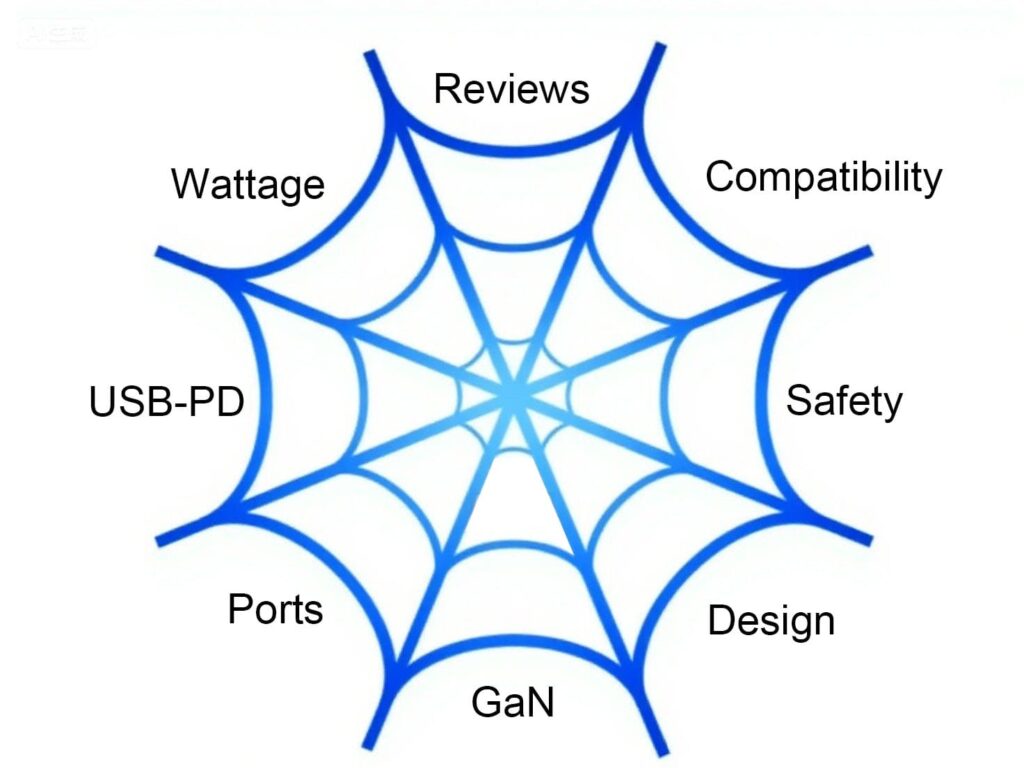
More to check

More to check

Conclusion: Invest in Your Connectivity

Your travel charger is the unsung hero of your go-bag. Choosing the right one—a powerful, compact, safe, and versatile GaN charger with multiple ports—will transform your travel experience. It declutters your bag, reduces your stress, and, most importantly, keeps you connected to the world, your work, and your loved ones, no matter where your journey takes you.

Ditch the bundle of old chargers and make the upgrade. Your future self, calmly working on a fully charged laptop while everyone else scrambles for an outlet, will thank you.

Ready to find your perfect travel charger? Use the guide and checklist above to compare top-rated models on Amazon or your favorite electronics retailer today!

QC 2.0 vs. QC 3.0 vs. QC 4.0: A Deep Dive into Qualcomm’s Fast Charging

Executive Summary

The evolution from QC 2.0 to QC 4.0 represents a dramatic leap in charging technology, reshaping how we power our mobile devices. This in-depth analysis explores the technical specifications, real-world performance, and underlying architectures of these three generations of Qualcomm’s Quick Charge technology. QC 2.0 pioneered the fast-charging revolution with its high-voltage approach, while QC 3.0 introduced intelligent, incremental voltage adjustment for greater efficiency. The advent of QC 4.0 marked a fundamental shift, merging the best of Qualcomm’s innovation with the universal USB Power Delivery (PD) standard, resulting in faster, cooler, and more versatile charging. Understanding these differences is crucial for consumers, manufacturers, and tech enthusiasts looking to maximize charging speed, preserve battery health, and navigate a market saturated with buzzwords. This guide will demystify these standards, providing a clear roadmap from the foundational INOV algorithm in QC 3.0 to the dual-charging prowess of QC 4.0+.

Introduction: The Need for Speed in a Mobile World

In an era where smartphones are central to our personal and professional lives, battery anxiety remains a pervasive concern. The demand for faster, more efficient charging solutions has never been higher. Qualcomm, a leader in mobile semiconductors, has been at the forefront of this race with its Quick Charge (QC) technology. Integrated into its widely-used Snapdragon processors, Quick Charge has become a de facto standard for Android devices.

The journey from QC 2.0 to QC 4.0 is not merely a story of increasing wattage. It is a narrative of increasing intelligence, efficiency, and compatibility. Each generation has addressed the limitations of its predecessor, evolving from a simple high-power solution to a sophisticated power management system that prioritizes both speed and battery longevity. This article will dissect the technical marvels of Qualcomm’s Quick Charge technology, providing a clear, generation-by-generation comparison to help you understand which standard best meets your needs and what the future holds for wireless power.

The Pioneer: QC 2.0 – The High-Voltage Revolution

QC 2.0 was the generation that truly brought “fast charging” into the mainstream lexicon. Before its introduction, most smartphones charged at a standard 5V/2A (10W). QC 2.0 shattered this ceiling by dramatically increasing the voltage.

QC 2.0 Technical Specifications and How It Works

The core innovation of QC 2.0 was its ability to negotiate a higher voltage between the charger and the phone. Instead of being locked at 5V, a QC 2.0-compatible charger could provide power at multiple levels.

Key Technical Specs of QC 2.0:

  • Supported Profiles: 5V, 9V, and 12V (Class A); 5V, 9V, 12V, and 20V (Class B).

  • Maximum Current: 3A (1.67A for 12V profile).

  • Theoretical Maximum Power: 18W (9V/2A or 12V/1.67A) for most smartphones.

  • Connector: Utilizes Micro-USB and the early USB-C connectors.

The process is simple: the phone and charger communicate via a data signal. When a compatible phone is connected, it signals the charger to switch from the default 5V to a higher voltage, such as 9V. This higher voltage allows more power (Watts = Volts x Amps) to be delivered to the phone without increasing the current, which is a primary cause of heat generation in cables.

Real-World Performance and Limitations

In practice, QC 2.0 could charge a typical smartphone from 0% to 50-60% in about 30 minutes—a remarkable feat at the time. This “rapid charging” phase was most effective when the battery was low.

However, QC 2.0 had significant drawbacks:

  1. Inefficiency and Heat: The high-voltage approach created substantial heat. The voltage conversion from 9V/12V down to the battery’s ~4.2V happens inside the phone, generating waste heat that is detrimental to both the internal components and the battery’s long-term health.

  2. Lack of Granularity: QC 2.0 operated in fixed steps (5V, 9V, 12V). It couldn’t fine-tune the voltage, leading to inefficient power transfer as the battery filled up.

  3. Competing Standards: The success of QC 2.0 led to a flood of proprietary fast-charging standards from other manufacturers (e.g., MediaTek’s Pump Express, Samsung’s Adaptive Fast Charging), creating a fragmented and confusing market.

The Refinement: QC 3.0 – The Era of Intelligent Charging

Building on the foundation of QC 2.0, QC 3.0 was engineered to address its predecessor’s inefficiencies. The key differentiator was no longer raw power, but intelligent power management.

The INOV Algorithm: The Brain Behind the Brawn

The heart of QC 3.0 is Qualcomm’s Intelligent Negotiation for Optimum Voltage (INOV). This proprietary algorithm allows the device to dynamically request the most efficient voltage level in real-time, in increments of 200mV.

Key Technical Specs of QC 3.0:

  • Voltage Range: A much wider range from 3.6V to 20V (in 200mV steps).

  • Maximum Current: 3A (for voltages up to 9V) or 2.6A (for higher voltages).

  • Theoretical Maximum Power: 36W (with specific configurations), though most implementations capped at 18W.

  • Improved Efficiency: Claimed to be up to 38% more efficient than QC 2.0.

Instead of jumping between 5V, 9V, and 12V, a QC 3.0 device could request, for example, 6.4V or 8.6V, whatever was the most optimal for the battery’s current state. This granular control had two major benefits:

  1. Reduced Heat: By minimizing the voltage conversion differential, QC 3.0 generated significantly less heat than QC 2.0, protecting the battery and enabling safer, sustained charging.

  2. Faster Overall Charging: While the peak charging speed might have been similar to QC 2.0, the ability to maintain an optimal power level for longer periods meant the total charge time from 0% to 100% was noticeably faster.

Backward Compatibility and User Experience

A critical feature of QC 3.0 was its backward compatibility with QC 2.0. A QC 3.0 phone could still fast charge with a QC 2.0 charger, albeit without the INOV benefits. Similarly, a QC 2.0 phone would work with a QC 3.0 charger, defaulting to the older standard’s fixed voltage steps.

For users, QC 3.0 delivered a more consistent and reliable experience. The reduction in heat was palpable, and the technology became ubiquitous in mid-range to high-end smartphones for years, solidifying Qualcomm’s dominance in the fast-charging arena.

The Unification: QC 4.0 and QC 4.0+ – The Power Delivery Alliance

With QC 4.0, Qualcomm didn’t just iterate; it reinvented its strategy. Recognizing the industry’s move towards the universal USB Power Delivery (USB-PD) standard, QC 4.0 was built from the ground up to be compatible with it.

The Dual-Charging Architecture

The most significant technical advancement in QC 4.0 is its Dual Charge++ technology. This is a more advanced version of the multi-cell pumping architecture found in later QC 3.0 implementations.

  • How It Works: Instead of using a single power management IC (PMIC), the charging current is split between two PMICs within the phone. This effectively halves the current passing through each chip.

  • The Benefit: This parallel charging method drastically reduces heat buildup and increases charging efficiency. It allows for higher overall power levels while keeping the device cooler—a critical factor for both safety and battery longevity.

Integration with USB Power Delivery (PD)

This is the single most important differentiator for QC 4.0. For the first time, a Qualcomm Quick Charge standard natively supported the universal USB-PD protocol.

  • What is USB-PD? USB Power Delivery is a universal charging standard developed by the USB Implementers Forum (USB-IF). It is designed to be a single, cross-compatible standard for everything from smartphones to laptops.

  • Why It Matters: By incorporating USB-PD, QC 4.0 devices can charge rapidly with a wider range of chargers, including those for modern laptops like MacBooks and Dell XPS models. This moves the industry away from proprietary standards and towards a unified ecosystem.

QC 4.0+ builds on this foundation with further enhancements, most notably a focus on Battery Saver technology, which is designed to maintain battery health over time, and even more granular voltage control (in 20mV steps instead of 200mV).

Key Technical Specs of QC 4.0/4.0+:

  • Compatibility: Native support for USB Power Delivery (USB-PD).

  • Architecture: Dual Charge++ technology.

  • Voltage & Current: Supports a wide range with a focus on the optimal USB-PD profile of 5V/3A, 9V/3A, 11V/3A, and 12V/2.6A for up to 27W.

  • INOV 3.0: The latest version of the algorithm with finer 20mV steps.

  • Safety Features: Enhanced thermal management and voltage/current monitoring.

In practice, QC 4.0 is not just about being faster than QC 3.0; it’s about being smarter, cooler, and more universal. Qualcomm claimed QC 4.0+ could provide up to 5°C cooler operation, 20% faster charging, and 30% higher efficiency compared to QC 3.0.

Head-to-Head Comparison Table

FeatureQC 2.0QC 3.0QC 4.0 / 4.0+
Maximum Power18W (typical)18W (typical), 36W (max)27W+ (with USB-PD)
Voltage NegotiationFixed Steps (5V, 9V, 12V)Dynamic (3.6V-20V in 200mV steps)Dynamic with INOV 3.0 (20mV steps in 4.0+)
Key InnovationHigh-Voltage ChargingINOV AlgorithmDual-Charging + USB-PD Compatibility
Primary ConnectorMicro-USB / USB-CUSB-CUSB-C
Heat GenerationHighModerateLow
EfficiencyLowModerateHigh
Backward CompatibleWith QC 2.0With QC 2.0/3.0 & USB-PD
Battery Health FocusLowModerateHigh (Battery Saver in 4.0+)
Industry ImpactPopularized Fast ChargingRefined & Standardized itMoved towards Universal Standard

Which One Should You Choose? A Practical Guide

  • You have a device with QC 2.0 or QC 3.0: Your charging ecosystem is mature and accessories are widely available. While it lacks the universality of QC 4.0, it still provides a solid fast-charging experience. A good quality QC 3.0 wall charger or a versatile GaN charger that supports QC 3.0 is a great investment.

  • You are buying a new device (or charger) today: You should prioritize QC 4.0+ or a charger that supports both USB-PD and QC. The future is universal. A charger that supports USB-PD and QC 4.0 will not only fast-charge your current Android phone but also be compatible with iPhones (which use USB-PD), modern laptops, tablets, and other gadgets. This reduces the number of chargers you need to carry and ensures the best possible investment for the evolving tech landscape.

The Future: Beyond QC 4.0 and the Road to QC 5

Qualcomm has since released QC 5, which pushes power delivery to 100W+ and can charge a phone from 0% to 50% in just 5 minutes. However, the principles established in QC 4.0 remain foundational: extreme power is achieved through advanced dual-charge architectures, deep integration with USB-PD PPS (Programmable Power Supply), and an uncompromising focus on thermal management.

The legacy of QC 4.0 is its role as a crucial bridge, successfully merging Qualcomm’s proprietary leadership with the industry’s need for a universal standard. It proved that a company could champion its own technology while embracing an open ecosystem, a lesson that continues to benefit consumers today.

Conclusion

The evolution from QC 2.0 to QC 4.0 is a clear trajectory from raw power to intelligent, efficient, and universal charging. QC 2.0 was the revolutionary pioneer that made fast charging a must-have feature. QC 3.0 refined this with intelligent algorithms, making charging cooler and more efficient. Finally, QC 4.0 and 4.0+ represent the maturation of the technology, embracing universal standards like USB Power Delivery while introducing advanced dual-charging architectures for unparalleled speed and safety.

For the modern consumer, understanding this progression is key to making informed purchasing decisions. While QC 2.0 and 3.0 devices still serve millions well, the future lies in the universal compatibility and superior engineering of QC 4.0 and beyond. When seeking out your next charger or device, looking for the QC 4.0 and USB-PD logos is your best guarantee of a fast, cool, and future-proof charging experience.

The Ultimate Guide to the Guangzhou Mobile Accessories Wholesale Market: The Global Epicenter for Phone Accessories

The Guangzhou Mobile Accessories Wholesale Market represents the epicenter of the global mobile accessories supply chain, a sprawling, dynamic ecosystem where global trends are born and business fortunes are made. For wholesalers, retailers, and brand owners looking to source custom phone accessories wholesale, Guangzhou is an unparalleled destination. This comprehensive guide delves deep into the city’s legendary wholesale hubs, including the iconic Zhongbai Dexing Electronic City, the colossal Guangzhou New Asia Wholesale Mobile Accessories Market, and the specialized towers of Nanfang Building and Nantai Wholesale Market. Navigating this vast network can be daunting, but understanding the unique role of each market is the key to unlocking a world of opportunity. From prototyping the latest GaN chargers and MagSafe-compatible cases to securing bulk orders of screen protectors and cables, this article provides the essential map and strategic insights for anyone serious about succeeding in the China Mobile Accessories Wholesale Market.

Introduction: Guangzhou – The Unrivaled Titan of Mobile Accessories

In the global hierarchy of electronics sourcing, few cities command the respect and dominance of Guangzhou, the bustling commercial capital of Southern China. As a cornerstone of the Pearl River Delta manufacturing megalopolis, Guangzhou is not just a city of markets; it is a massive, integrated production and distribution hub. The Guangzhou Mobile Accessories Market is where you can witness the entire product lifecycle, from raw component sourcing and initial design to mass production and global logistics, all within a few city blocks.

For international buyers, the appeal is multifaceted: unparalleled variety, competitive pricing driven by fierce competition, and the agility to quickly adapt to the latest trends. Whether your target market demands budget-friendly basics or high-end, innovative products, the Guangzhou Mobile Accessories Wholesale Market complex has dedicated suppliers to meet every need. This guide will navigate the specific strengths of each major market, providing a strategic framework for your sourcing journey.

Navigating the Giants: A Deep Dive into Guangzhou’s Key Wholesale Hubs

Zhongbai Dexing Electronic City

Zhongbai Dexing Electronic City

1. Zhongbai Dexing Electronic City (中百德兴电子城) – The Core of Components and Innovation

Often the first stop for serious buyers, Zhongbai Dexing Electronic City is a high-rise temple to electronics. Unlike markets that focus solely on finished goods, Zhongbai Dexing is renowned for its depth in components and its concentration of innovative manufacturers.

  • Location: Near the Yuexiu district, easily accessible from the Guangzhou Railway Station.

  • What to Find Here: This is the go-to destination for R&D teams and businesses looking for custom phone accessories wholesale. You’ll find suppliers specializing in:

    • Electronic Components: ICs for fast charging, connectors, PCBAs, and battery cells.

    • Molds and Tooling: Vendors who can create precise molds for phone cases, which is the first step in any custom case project.

    • High-End & Niche Accessories: Early-stage innovators showcasing the latest in GaN technology, wireless charging pads, and smart accessories.

    • Connector Specialists: A vast selection of USB-C, Lightning port modules, and cable manufacturing components.

  • Strategic Advantage: Zhongbai Dexing is less about picking ready-made products off a shelf and more about building relationships with the technical masterminds and factories behind them. It’s the ideal place to discuss OEM/ODM projects and prototype new ideas for the China Mobile Accessories Wholesale Market.

Guangzhou New Asia Wholesale Mobile Accessories Market

Guangzhou New Asia Wholesale Mobile Accessories Market

2. Guangzhou New Asia Wholesale Mobile Accessories Market (新亚洲电子城) – The Digital Hub

A relative newcomer that has quickly become a powerhouse, the Guangzhou New Asia Wholesale Mobile Accessories Market is a modern, multi-story complex designed for the digital age. It is known for its organized layout and its strong focus on e-commerce fulfillment.

  • Location: In the Tianhe District, a major commercial center.

  • What to Find Here: New Asia caters heavily to the domestic and cross-border e-commerce boom. The offerings are vast and varied:

    • Phone Cases & Covers: Every imaginable style, from minimalist clear cases to elaborate designer collaborations.

    • Screen Protectors: A massive selection of tempered glass and hydrogel films, with vendors offering custom cutting machines.

    • Power Solutions: A wide array of power banks, chargers (including the latest QC/PD GaN chargers), and charging cables.

    • Audio Products: A full floor dedicated to wired and wireless earphones, headphones, and Bluetooth speakers.

  • Strategic Advantage: The suppliers in New Asia are adept at dealing with online sellers. They understand small-batch orders, dropshipping, and provide high-quality product images and videos. For anyone looking to stock an Amazon store or a Shopify site, this market is essential.

Nanfang Building

Nanfang Building

3. Nanfang Building (南方大厦) & Nantai Wholesale Market (南太) – The Specialized Duo

These two establishments represent the specialized and bulk-sale segments of the market, respectively.

Nanfang Building has a long history and is known for its focus on communication devices and their accessories. It’s a more traditional market but holds gems for those seeking specific components and repair parts.

  • What to Find Here: A strong focus on mobile phone repair parts (screens, batteries, housings), older model accessories, and a significant selection of walkie-talkies and related communication gear.

Nantai Wholesale Market, while sometimes associated with other goods, has sections dedicated to low-cost, high-volume mobile accessories. This is where you go for absolute rock-bottom pricing on commodity items.

  • What to Find Here: Basic silicone cases, simple screen protectors, low-cost charging cables, and other no-frills accessories. The emphasis is on volume, making it a destination for buyers targeting highly price-sensitive markets.

  • Strategic Advantage: For buyers with a focus on repair services or budget-conscious emerging markets, this duo offers a pricing edge that the more modern malls cannot match.

The Product Spectrum: What You Can Source in Guangzhou

The diversity of products available across the Guangzhou Mobile Accessories Wholesale Market is staggering. A walk through these complexes is a tour of the entire global accessory trend cycle.

  1. Protective Gear: This is the foundation of the market. You will find every type of phone case material—TPU, PC, silicone, leather, and even wood and marble. The capacity for custom phone accessories wholesale in this category is immense, with suppliers offering printing, branding, and unique material combinations.

  2. Power & Charging: This sector is rapidly evolving. Beyond standard cables and chargers, Guangzhou is the best place to source advanced products like:

    • GaN Travel Chargers: Compact, multi-port chargers from brands like Ugreen and Baseus, alongside countless factory versions.

    • MagSafe-Compatible Ecosystems: Wireless chargers, magnetic battery packs, and compatible cases for the iPhone series.

    • High-Capacity Power Banks: From slim 5000mAh packs to massive 50,000mAh beasts with PD 100W output.

  3. Audio Accessories: The birthplace of countless TWS (True Wireless Stereo) earbud brands. You can find everything from AirPods clones to high-fidelity audio brands, alongside neckband headphones and gaming headsets.

  4. Screen Protection: A highly competitive category with constant innovation in glass hardness, oleophobic coatings, and application systems. Vendors can custom-cut protectors for any device, including new launches within weeks of release.

  5. Smart & Connected Accessories: This includes mobile grips (like PopSockets), lens attachments, selfie lights, gimbals, and an expanding universe of IoT devices that connect to smartphones.

Nantai Wholesale Market

Nantai Wholesale Market

A Strategic Sourcing Guide for International Buyers

Navigating the China Mobile Accessories Wholesale Market requires more than just a flight ticket; it requires a plan.

Before You Go:

  • Research and Identify: Have a clear list of the products and quantities you intend to source. Research which markets (e.g., Zhongbai Dexing for components, New Asia for finished e-commerce goods) are most relevant.

  • Secure a Translator/Agent: While many younger vendors speak basic English, technical and negotiation details are best handled with a professional Mandarin speaker. A sourcing agent can be invaluable.

  • Prepare Your Business Documents: Bring business cards and, if possible, a catalog of your business. Chinese suppliers respect established businesses.

On the Ground:

  • Dedicate Multiple Days: You cannot cover the Guangzhou Mobile Accessories Market in a single day. Allocate at least 3-5 days for a productive trip.

  • Start with a Walk-Through: On your first day, simply walk through the markets without the pressure to buy. Take notes, map out floors, and collect supplier catalogs and WeChat contacts.

  • Negotiate Intelligently: Pricing is not fixed. Your ability to negotiate depends on your quoted quantity. Ask for “MOQ” (Minimum Order Quantity) and tiered pricing for larger volumes. Be respectful but firm.

  • Focus on Building Relationships (关系 – Guānxi): The Chinese business culture is built on long-term relationships. Show interest in a supplier’s factory, discuss potential for future business, and be a trustworthy partner. This often yields better prices and service than aggressive haggling.

Quality Control and Logistics:

  • Always Request Samples: Before placing a large order, always pay for samples to check quality, functionality, and packaging.

  • Discuss OEM/ODM Possibilities: If you have a brand, inquire about custom phone accessories wholesale options. Most suppliers in these markets have in-house design teams or can work from your provided designs.

  • Clarify Shipping Terms: Understand who is responsible for shipping—Ex Works (you handle everything from their door), FOB (they get it to the port), or CIF (they cover insurance and freight to your port). Using a reliable freight forwarder is highly recommended.

The Future of the Guangzhou Mobile Accessories Market

The Guangzhou Mobile Accessories Wholesale Market is not resting on its laurels. It is continuously evolving, with a clear trend towards higher value-added products. The focus is shifting from cheap knock-offs to innovative, branded, and high-quality accessories. Sustainability is also becoming a talking point, with more suppliers offering eco-friendly materials and packaging. Furthermore, the integration of live-streaming e-commerce within the markets themselves is transforming how products are demonstrated and sold to both domestic and international buyers.

Conclusion: Your Gateway to Global Mobile Accessories Success

For anyone serious about the mobile accessories business, a pilgrimage to the Guangzhou Mobile Accessories Wholesale Market is not just recommended; it is essential. The sheer scale, variety, and dynamism found within Zhongbai Dexing Electronic City, the Guangzhou New Asia Wholesale Mobile Accessories Market, and the surrounding hubs offer a competitive edge that cannot be replicated online or through intermediaries.

This market complex is more than a collection of shops; it is a living, breathing organism that pulses with the latest trends and technologies. By approaching your sourcing trip with preparation, strategy, and a focus on building lasting partnerships, you can tap directly into the source of the global mobile accessories trade, securing the products, prices, and innovations that will define your business’s success for years to come. The gateway to the world of phone accessories is in Guangzhou—your key is understanding how to unlock it.

What a good charger will bring you?

When you are buying a travel charger, car charger or even a wireless power bank charger, you will doubt the quality if the band name is not good enough for you to recognize. What is a good charger for your phone? Let us make things simple and check as below:

  1. Input Protection: No matter the travel charger or the car charger, this is a must for it. It is for safety purpose. It will avoid electronic shock from AC or getting fire by transfer the 90-240V AC or 12/24V DC to the right voltage to your phone.
  2. Output protection: This is a bit complicated. No matter the travel charger or the car charger, it should provide the right voltage and currency for the phone to charge. If no protection for output, the charger will still keep charging the phone! As the worst result, the phone cannot stop the charge and it will cause fire or smoke just by continuous charge!Things would be different if the charger or phone has a protection!
  3. Stable Currency: The charge will put more currency when it begins to charge the phone, less in the middle and 0 at the end. Why I say stable here? It will always keep the same? Of course no! The stable currency means that, it will meet the charging currency for the phone needs. For example, at the beginning the phone requires 1.8A and 5V, which is the right currency that phone needs to put its max charge. Suddenly the currency goes to 2.5A or more. It would be bad for the batteries even it does not cause explode or fire.
  4. Stable voltage: the same importance as the stable currency.
  5. With fuse: Of course the IC cannot protect your phone fully when lightning in a stormy day. But a fuse can burn and protect your phone when there goes a 10X input currency or voltage.
  6. Burning protection: A good charger will select good plastic materials which will help you when the charge has a problem itself. It will protect your charger itself from burning. The worst is that it will cause smoke and will not get fire.
  7. Life time: A good charger can last 5 years or more without any problem. A cheep one may remain only 3 months. And the good one can make your phone work well. A bad cheep charger may lead your phone to a short life.

Comments? Questions? Please leave your ideas below. We would be happy with your words. Thank you!