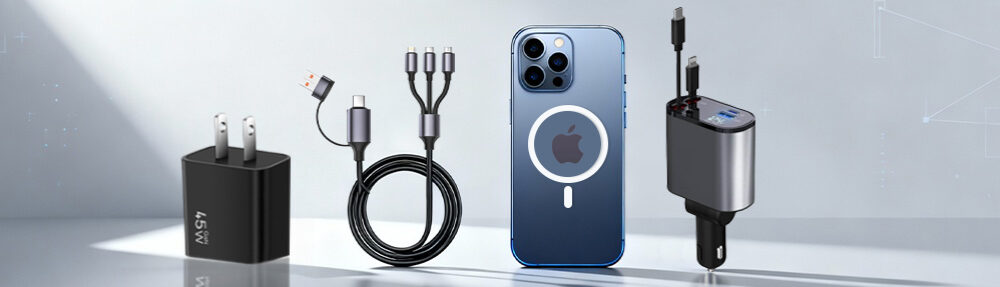
The shift to USB-C cables in the smartphone world has been a long time coming. For years, the tech landscape was divided: the vast ecosystem of Android devices embraced the universal USB-C, while Apple stood apart with its proprietary Lightning connector. This division meant that users invested in separate, incompatible cables and accessories. However, with the release of the iPhone 15 series, Apple has finally adopted USB-C, a move significantly influenced by regulatory pressure from the European Union, which mandated a common charger to reduce electronic waste .
This transition promises a more unified future, but it also raises a crucial question: are USB-C cables for Android and iPhone now truly the same? The answer is more nuanced than a simple yes or no. While the physical connector is identical, underlying differences in protocol support, manufacturer restrictions, and performance can create a tangled web of compatibility. This article will dissect the details, providing a clear and comprehensive guide to the similarities and differences between USB-C cables used for Android phones and iPhones.
The Common Ground: Unifying with USB-C
The universal adoption of the USB-C physical connector is a massive step forward for consumers. This section covers the shared benefits that apply regardless of your phone’s brand.
Physical Connector and Basic Functionality
The most immediate benefit of USB-C is its reversible design. Unlike its predecessors like Micro-USB, the USB-C plug can be inserted either way up, eliminating the frustration of fumbling in the dark . This small but significant feature is a universal standard.
For most everyday accessories, this standardization is a boon. Common devices like standard USB-C headphones, charging banks, and car chargers are designed to work with any device featuring a USB-C port. This basic level of interoperability means that in many situations, you can indeed use the same cable for both an Android phone and an iPhone .
Core Charging and Data Transfer Capabilities
At their most fundamental level, all USB-C cables support charging and data transfer. The USB-C standard was designed to be powerful and versatile from the outset, supporting higher power delivery and faster data speeds than the older Lightning connector .
Both Android and iPhone devices can leverage the USB Power Delivery (PD) protocol, a fast-charging standard that intelligently negotiates the optimal power flow between the charger and the device . This means that a high-quality USB-C cable that supports PD can be used to fast-charge a compatible Android phone or an iPhone 15.

USB-C cables with LED display
Key Differences: Where the Paths Diverge for USB-C cables
Despite the shared physical plug, several critical factors determine whether a cable will perform optimally—or even work correctly—across different devices.
Protocol Support and Charging Speeds
While the physical cable is essential, the actual charging speed and data transfer rate are dictated by the technical protocols supported by both the cable and the phone.
Charging Protocols: Although many devices use USB Power Delivery (PD), numerous Android manufacturers employ their own proprietary fast-charging protocols alongside it (such as Qualcomm’s Quick Charge). iPhones, since the iPhone 8, have relied on PD . The catch is that a cable designed for a specific Android brand’s ultra-fast charging might not offer any advantage when used with an iPhone, and vice versa. Furthermore, there are ongoing efforts like the UFCS (Universal Fast Charging Specification) to create a unified standard, which is starting to be adopted by some Chinese manufacturers .
Data Transfer Speeds: This is one of the most significant points of variation. Apple has implemented a tiered strategy within the iPhone 15 lineup. The standard iPhone 15 and 15 Plus models feature USB-C ports limited to USB 2.0 speeds (480 Mbps), which is the same as the old Lightning cable. In contrast, the iPhone 15 Pro and Pro Max models support USB 3.0 speeds (up to 10 Gbps), enabling much faster file transfers . The Android landscape is fragmented; budget phones may still use USB 2.0, while flagship models often support USB 3.2 or even USB 4, with speeds reaching up to 40 Gbps . To achieve these higher speeds, you must use a cable that supports the specific protocol, as not all USB-C cables are created equal.
The MFi Certification and Apple’s Ecosystem Control
A major point of contention with Apple’s switch to USB-C is the potential continuation of its Made for iPhone (MFi) program. For years, Apple has required accessory manufacturers to use certified chips in Lightning cables, ensuring a cut of the profits and control over quality .
Early reports and teardowns of iPhone 15 cables suggest that Apple may be extending this practice to some of its USB-C cables. A certified MFi USB-C cable likely contains a special authentication chip. Without this chip, third-party cables might be limited to slower charging speeds or basic functionality when used with an iPhone . This means that a generic or Android-focused USB-C cable might not work to its full potential with your iPhone. In contrast, the Android USB-C ecosystem is generally more open, with fewer such restrictive certification requirements.

USB-C Cables -Female & Male Connector
Build Quality and USB-C Cable Durability
A cable’s performance is also tied to its physical construction. The quality of the internal wires and shielding directly impacts its ability to handle high-speed data and fast charging.
High-Speed Requirements: Cables designed for fast data transfer (e.g., USB 3.2 or USB 4) and high-wattage charging (e.g., over 60W) require superior internal components and thicker wires to minimize power loss and signal interference . A cheap, poorly made cable might only support slow charging and USB 2.0 data speeds, regardless of the connected device.
Physical Durability: Common failure points include broken solder joints at the connector head and fraying cables. Some manufacturers reinforce these areas with thicker rubber housing or braided nylon jackets to improve longevity . The build quality varies more by brand and price than by the intended device platform.
Table: USB-C Cable and Protocol Compatibility
| Feature | Typical Android Cable | Typical iPhone Cable | Key Consideration |
|---|---|---|---|
| Physical Connector | USB-C (Universal) | USB-C (Universal) | Physically interchangeable. |
| Fast Charging | Varies (PD, QC, etc.) | USB Power Delivery (PD) | Phone and charger must support the same protocol. |
| Data Transfer Speeds | USB 2.0 to USB 4 | iPhone 15/Plus: USB 2.0 iPhone 15 Pro/Max: USB 3.0 | Cable must be rated for the desired speed (e.g., USB 3.0). |
| MFi Certification | Not Required | Potentially Required for Full Speed | Non-certified cables may have limited functionality on iPhones. |
A Practical Guide to Choosing and Using USB-C Cables
Given these complexities, here is a practical guide to navigating the world of USB-C cables.
For iPhone USB-C cables Users:
Stick with Certified Cables: To ensure full functionality and fast charging speeds, use Apple’s original cables or MFi-certified third-party USB-C cables .
Understand Your Model: If you own an iPhone 15 Pro and want to transfer large video files quickly, you will need to purchase a separate USB 3.0-speed cable, as the one in the box may not support it .
Test Android Cables Carefully: You can use an Android friend’s cable in a pinch, but do not expect it to deliver optimal fast charging unless you are sure it supports USB Power Delivery.
For Android USB-C cables Users:
Check Your Phone’s Capabilities: Know your device’s maximum charging wattage and data transfer standards (e.g., USB 3.1). This information can usually be found in the phone’s specifications.
Buy Accordingly: Purchase cables from reputable brands that explicitly state support for the protocols your phone uses. If your phone supports 65W charging, a cable rated only for 30W will be a bottleneck.
For All Users:
Look for Certification Labels: When buying new cables, look for logos or text indicating support for “USB PD” (Power Delivery), “USB 3.1,” “USB 4,” etc.
Beware of Ultra-Cheap Cables: Extremely low-priced, no-name cables often use substandard materials that can charge slowly, transfer data poorly, or even pose a safety risk to your devices.
When in Doubt, Use the Original: The safest bet for achieving the best performance is to use the cable that came with your phone or a certified replacement from the manufacturer.

USB-C Cables for iPhone VS Android
Conclusion
The move to a universal USB-C connector is a welcome change that simplifies our digital lives. On the surface, the dream of a single cable for all devices is closer than ever. However, beneath this unified exterior, the differences in implementation between Android and iPhone remain significant. From Apple’s potential MFi restrictions and tiered data speeds to the myriad of fast-charging protocols in the Android world, true universal compatibility is still a work in progress.
The key takeaway is that not all USB-C cables are created equal. Their performance is dictated by a combination of the cable’s own capabilities, the phone’s supported protocols, and the charger being used. As a consumer, being an informed buyer—checking specifications, understanding your device’s needs, and choosing quality, certified products—is the only way to cut through the confusion and ensure you get the fast, reliable performance you expect from your modern smartphone.


