The Ultimate Guide to Power Banks: Sourcing, Safety, and the Best Power Banks China Manufacturer

Introduction: The Unplugged Revolution

In our hyper-connected world, a dead battery is more than an inconvenience; it’s a moment of disconnection, a halt in productivity, and a source of anxiety. From the busy executive closing a deal on their smartphone to the traveler navigating a foreign city with GPS, the need for reliable, on-the-go power is universal. This demand has fueled a revolution, spearheaded by a single, indispensable device: the power bank. Let’s go with power banks wholesale and sourcing guides.

Also known as portable chargers, these compact energy reservoirs have evolved from niche gadgets to everyday essentials. The market is vast and varied, catering to every need and budget. But for businesses looking to capitalize on this booming industry, the journey involves critical decisions about sourcing, quality, and logistics. This comprehensive guide will explore the power bank ecosystem, from choosing the right device for personal use to navigating the complexities of power banks wholesale and identifying the best power banks China manufacturer.

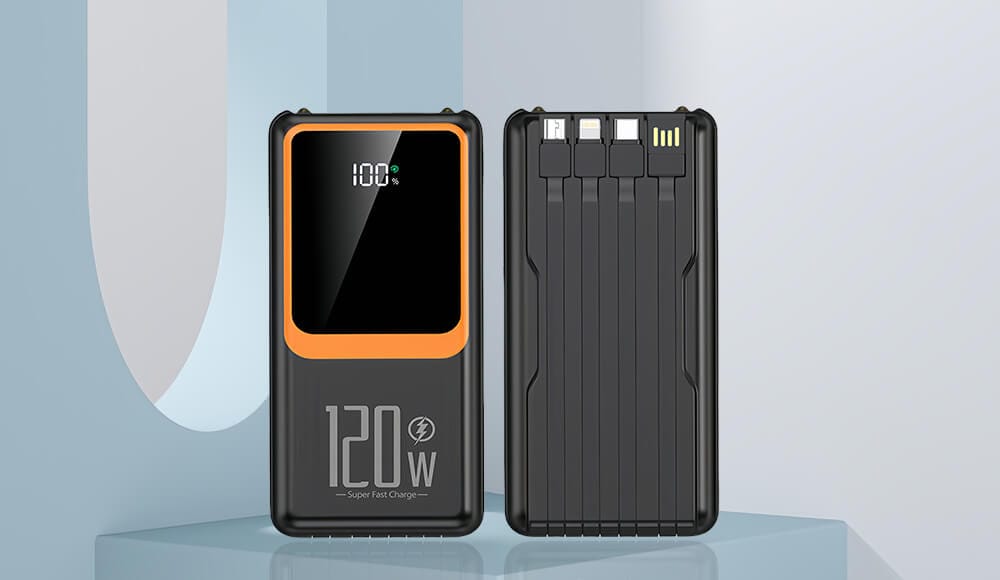
Super Fast Power Banks Wholesale

Super Fast Power Banks Wholesale

Understanding Power Banks: More Than Just mAh

Before diving into the business of sourcing, it’s crucial to understand what makes a great power bank. Not all power banks are created equal, and the specs on the label only tell part of the story.

1. Capacity (mAh – Milliampere-hour):
This is the most advertised specification. It indicates the total energy stored in the power bank. A 10,000mAh power bank can, in theory, charge a 3,000mAh smartphone about three times. However, efficiency losses due to heat and voltage conversion mean real-world output is typically 60-70% of the rated capacity. Always look for a higher capacity than your device’s battery.

2. Output Current (Amps – A) and Voltage (Volts – V):
This determines charging speed. Standard output is 5V/2.1A, which is sufficient for most smartphones and tablets. For fast-charging devices, look for support for technologies like Qualcomm Quick Charge, Power Delivery (PD), or USB-PD. These can significantly reduce charging times for compatible phones and laptops.

3. Portability and Build Quality:
A balance between capacity and size/weight is key. A 50,000mAh power bank is powerful but hardly portable. Look for sleek designs, durable materials (like ABS+PC alloy), and reputable brands that prioritize safety.

4. Safety Features:
This is non-negotiable. High-quality power banks include multiple protection circuits against:

  • Overcharge: Prevents the connected device from charging beyond its capacity.

  • Over-discharge: Protects the power bank’s own battery from draining completely.

  • Short Circuit: Safeguards against internal and external electrical faults.

  • Temperature Control: Prevents overheating during charge and discharge cycles.

Cutting corners on safety can lead to damaged devices or, in extreme cases, fire hazards. This is why sourcing from established Power banks suppliers with certified products is paramount.

The Wholesale Landscape: Tapping into the Source

For retailers, e-commerce stores, corporate gift suppliers, or promotional companies, buying power banks wholesale is the most cost-effective strategy. The global hub for electronics manufacturing, and consequently for portable chargers wholesale, is China. Tapping into this market can offer incredible margins and product variety, but it requires a strategic approach.

Why Source from China?

  • Cost-Effectiveness: Manufacturing at scale drastically reduces the per-unit cost.

  • Variety and Customization: Chinese manufacturers offer an unparalleled range of designs, capacities, and features. They are also experts in OEM (Original Equipment Manufacturing) and ODM (Original Design Manufacturing), allowing you to create custom-branded power banks with your logo and packaging.

  • Supply Chain Efficiency: The entire ecosystem—from battery cells to PCB (Printed Circuit Board) manufacturers and assembly lines—is concentrated in regions like Shenzhen, streamlining production.

Identifying the Best Power Banks China Manufacturer

Not all manufacturers are created equal. Finding a reliable partner is the difference between a profitable business and a logistical nightmare. Here’s how to identify the best power banks China manufacturer:

1. Certifications are King:
Always prioritize manufacturers whose products carry international safety certifications. The most important ones are:

  • CE (European Conformity): Indicates conformity with health, safety, and environmental protection standards for Europe.

  • RoHS (Restriction of Hazardous Substances): Ensures the product is free of specific hazardous materials.

  • FCC (Federal Communications Commission): For products sold in the USA, ensuring they don’t interfere with other electronic devices.

  • UL (Underwriters Laboratories): A highly respected global safety certification company.

A manufacturer that invests in these certifications is serious about quality and safety.

2. MOQ (Minimum Order Quantity):
Understand the manufacturer’s MOQ. Some may require orders of 500, 1,000, or 5,000 units. This is a critical factor for new businesses. Some suppliers may offer lower MOQs, which is a good way to test the relationship and product quality before committing to a large order.

3. Sample Testing:
Never skip this step. Before placing a bulk order, request samples. Test them rigorously: check the actual capacity with a USB tester, assess the build quality, and verify the charging speed. This firsthand evaluation is your best insurance against a poor-quality batch.

4. Communication and Transparency:
A good supplier is responsive and transparent. They should be able to clearly answer technical questions, provide detailed product specifications, and offer clear timelines. Platforms like Alibaba, Made-in-China, and Global Sources are good starting points, but due diligence is essential.

Navigating Logistics: The Critical Role of “Power Banks Air” Shipping

Once you’ve partnered with a manufacturer and your order is ready, the next critical step is shipping. For time-sensitive goods like electronics, air freight is often the preferred method. However, shipping power banks by air comes with strict regulations due to the lithium-ion batteries inside, which are classified as dangerous goods.

Understanding “Power Banks Air” Regulations:
Lithium batteries can pose a fire risk if damaged or defective. International Air Transport Association (IATA) and national civil aviation authorities (like the FAA in the USA) have specific rules:

  • Power banks must be carried in carry-on baggage for personal travel. This rule is now well-known to most travelers.

  • For cargo shipments (power banks air freight), the rules are complex. They depend on the watt-hour (Wh) rating of the battery and whether the power banks are shipped alone or inside equipment.

  • Manufacturers and shippers must comply with specific packaging, labeling, and documentation requirements, including a Dangerous Goods Declaration.

Why This Matters for Your Business:
When working with your Power banks suppliers, you must confirm that they are experienced and certified in handling power banks air shipments. They should handle all the necessary compliance paperwork. Attempting to bypass these regulations can result in seized shipments, hefty fines, and serious safety risks. A reputable supplier will be your guide through this complex process, ensuring your goods arrive safely and legally.

Beyond Phones: The Expanding Universe of Power Bank Applications

The utility of power banks has expanded far beyond smartphones. This diversification opens up new wholesale and retail opportunities.

  • High-Capacity Laptop Power Banks: With USB-PD technology, power banks can now charge laptops, making them essential for digital nomads and professionals.

  • Solar Power Banks: Integrated solar panels offer a trickle charge in outdoor settings, ideal for campers, hikers, and emergency kits.

  • Power Banks for Medical Devices: Reliable power for CPAP machines, portable oxygen concentrators, and other critical medical equipment is a growing, life-saving niche.

  • Fashion and Lifestyle Power Banks: Sleek, designer power banks that double as fashion accessories or compact models integrated into wallets and bags.

  • Promotional Power Banks: Custom-branded power banks are one of the most effective corporate gifts, offering high perceived value and daily utility, ensuring your brand is always in sight.

Conclusion: Powering Your Success in a Mobile World

The humble power bank has cemented its place as a cornerstone of modern mobile life. For consumers, choosing a device from a reputable brand with the right balance of capacity, speed, and safety is key. For businesses, the opportunity in the power banks wholesale market is immense, but it hinges on strategic partnerships.

Success requires finding the best power banks China manufacturer—one that prioritizes certified quality, transparent communication, and reliable production. It involves understanding the intricacies of global logistics, especially the critical “power banks air” shipping regulations. By aligning with the right Power banks suppliers and focusing on genuine value rather than just the lowest price, you can tap into the endless demand for portable power and energize your business for the long run.

The End of Charging Anxiety? Breakthroughs in Smartphone Battery Technology

Charging anxiety – For over a decade, the smartphone has evolved at a blistering pace. We’ve seen cameras transform into professional studio equipment, screens become dazzling windows to virtual worlds, and processors powerful enough to run complex games. Yet, one component has stubbornly lagged behind, a digital ball and chain holding back our mobile lives: the battery.

We all know the feeling. That sinking sensation when the red battery icon appears, the frantic search for an outlet, the heavy power bank weighing down a bag. This is “charging anxiety,” and it has been the unsolvable problem of the mobile era. But for the first time, a wave of genuine technological breakthroughs promises to consign this anxiety to the history books.

The revolution is happening on three fronts: speed, longevity, and fundamental chemistry.

1. The Speed Revolution: From 0 to 100 in Minutes

Fast charging is no longer a novelty; it’s a battlefield. While companies have raced to higher wattages (with some now boasting 100W, 150W, and even 200W speeds), the real innovation is in the intelligence behind the charge.

  • GaN (Gallium Nitride) Technology: The unsung hero of fast charging. GaN chargers are smaller, more efficient, and generate less heat than traditional silicon chargers. This allows them to deliver high power consistently without the risk of damaging your phone—or melting your outlet.

  • Intelligent Power Management: Your phone is no longer a passive recipient of power. Advanced chipsets now manage the charging process in real-time, regulating voltage and current based on the phone’s temperature and your usage patterns. This means you can safely get a 50% charge in the time it takes to drink your morning coffee.

The promise is no longer just “all-day battery,” but “a day’s power in minutes.”

2. The Longevity Revolution: Batteries That Refuse to Die

What good is a fast-charging battery if it dies in two years? Battery degradation—the slow loss of maximum capacity over hundreds of charge cycles—is the next frontier. Manufacturers are finally tackling this head-on.

  • Advanced Battery Health Algorithms: Companies like Apple and Samsung now use sophisticated software that learns your charging habits. Features like “Optimized Battery Charging” hold the phone at 80% until you need it, reducing the wear and tear caused by staying at 100% for prolonged periods.

  • Hardware Innovations: New designs with multiple battery cells and improved heat dissipation systems prevent the high temperatures that are a primary killer of battery health. The goal is a battery that retains over 80% of its capacity after 1,000 full cycles—effectively doubling its usable lifespan.

This shift means your next phone won’t just last a day on a charge; it will last years before feeling the need for a replacement.

3. The Chemistry Revolution: Beyond Lithium-Ion

This is where the science fiction becomes reality. The lithium-ion battery has had a great run, but its limits are clear. The next generation is taking shape in labs around the world.

  • Solid-State Batteries: The holy grail. By replacing the flammable liquid electrolyte with a solid material, these batteries promise immense energy density (more power in the same size), dramatically faster charging, and zero fire risk. While still expensive to mass-produce, companies like Toyota and Samsung SDI are pouring billions into making them a commercial reality for smartphones.

  • Graphene Batteries: Graphene, a “wonder material” just one atom thick, could be a game-changer. It boasts incredible conductivity and heat dissipation. Batteries using graphene could charge from 0 to 100% in as little as 15 minutes and handle many more charge cycles than current tech. While still emerging, it represents a tangible path forward.

The Future is Unplugged

So, is this the end of charging anxiety? The answer is a cautious “yes.” We may not be throwing away our chargers entirely, but their role is changing. We’re moving from a world of daily, anxious plug-ins to a world of occasional, rapid top-ups.

The combination of blistering speed, enduring health, and revolutionary new materials means that soon, the battery percentage in the corner of your screen will cease to be a source of stress. It will become a mere footnote, freeing us to finally use our powerful pocket computers to their full, untethered potential. The future of mobile power isn’t just about lasting longer—it’s about forgetting about power altogether.

Things You Should Pay Attention When Using Power Bank

Most of the people would think that it is funny when they see this topic because it is so easy – just plug and use. As a professional manufacturer and supplier in mobile phone accessories, I would like to share with you some of my experience to avoid loss or harm when using the power banks.

Lider Power Bank Wholesale - PB103

Lider Power Bank Wholesale – PB103

Do not buy the cheapest one. Yes, Do not buy!
A good power bank is worth a good value. Most of the cheep power banks are made of cheep battery cells, no protection PCB, no testing before assembly and no QC for final finished process. Some of the maker themselves even do not know which one is good or bad just to know they can sell because some of customers need cheep power banks to sell. They do not care what the power bank is or it will cause problem. You can see that all these power banks are with very good prices no matter for wholesale or retail.
Buy good power banks from good band names. It will cost you a bit more but will give you more safe using and longer life. This is my suggestion.

Control your charging time.
Charge your power bank before it is used up. Do not charge it without maintains. Put the charging power bank under your sight and take care of that. Set alarm and check it when being charged.

Avoid exposure under sunshine. Humid surroundings will not do good to power banks, either. Put your power bank in a showdown, dry places.

Buy a new one if you find something strange or abnormal.
You are the user and know better than anybody else for your own power bank from the day you had it. Less output charging, longer input charging, hotter than ever in input or output charging, power bank housing getting fat and much more, any of them show that it is near the end of your power bank life. Buy a new one instead.

Use the power bank when necessary.
A power bank is for emergency use. Try to avoid using times and using frequency to extend the power bank recycling life. You can use your car charger when in a car and a travel charger when at home or in office.

Use a good charger to charge your power bank.
The output data should match the input data of your power bank on voltage and currency especially the voltage. A 5V 2.1A apple would be good for a power bank. But a 12V 2.1A charger would lead to smoke, fire or explosion for the power bank if no protection IC is installed there.

—————————————————————————————
Questions, wholesale prices or need more help? Contact Lider for help.

Solar Power Bank? Another kind of joke

As the phones are equipped with smaller batteries and larger screens, a power bank is a useful tool to back up when the power is going to be off. That is wonderful.

Solar Power Bank

Solar Power Bank

My friend show me a solar PowerBank. He told me this is a eco-friendly PowerBank, of course, solar power bank. Just like the eco-driven watches, it will absorb the sunshine and transfer it to power stored inside Power Bank. I smiled and said to him, it is a high-tech toy but it will not help you so much as you expected when your PowerBank is out of power.

He doubted what I said. I said to him, we can have a test for that. We can use up all the capacity of it now. And we put it in sunshine and test that.

We empty the power bank with charging my iPhone 6 and his Samsung Galaxy S6. We tried to charge another phone samsung S5 and the power bank could not be up to charge.

It is noon time and we put in the sunsine for about 60 mins. When we took that back, and try to charge our Samsung S5 again. It did work but that only lasted 5 mins.

How and why this happen? my friend asked.

It is a high-tech joke for you, I said. The solar light charging technology is not so helpful as a charger. Because the solar pannel absorbs the sunlight and transfer it to power stored into PowerBank. The currency is like 200 – 300mah max. This shows that, a power bank with 10,000mah, we charge that one hour, it would charge 500mah(we make this bigger than actual just to show the speed). It will take 20 hours to charge it full. Don’t forget, we count as 500mah/hour for the currency and the best time – noon to charge. You cannot always charge these 20 hours at noon.

So there comes to you – it is a good technogy but you cannot use solar charging for daily use, I said to my friend. When you are travelling, it is better to charge your power bank fully before you starts. It is not a perfect technogy to carry without a full charge. Or, it is a joke when you need to charge your phone badly without another better choice.