Executive Summary
In the interconnected world of modern technology, the humble USB cable is the unsung hero, a critical conduit for power and data. For businesses involved in USB Cables wholesale, understanding the intricate differences between USB-A, Micro-USB, Lightning, and USB-C is not just academic—it’s a commercial necessity. The market is a diverse ecosystem where legacy standards like Micro-USB coexist with the universal promise of USB-C and the proprietary walled garden of Apple’s Lightning. This comprehensive guide provides USB cables suppliers and wholesalers with a deep dive into the specifications, market applications, and strategic considerations for each connector type. We will explore why a diversified portfolio that includes everything from bulk USB C cables to custom USB-C cables wholesale options is key to capitalizing on current demand while future-proofing your business. Navigating this complex landscape effectively allows savvy wholesalers to meet the needs of every customer segment, from the budget-conscious to the tech-obsessed.
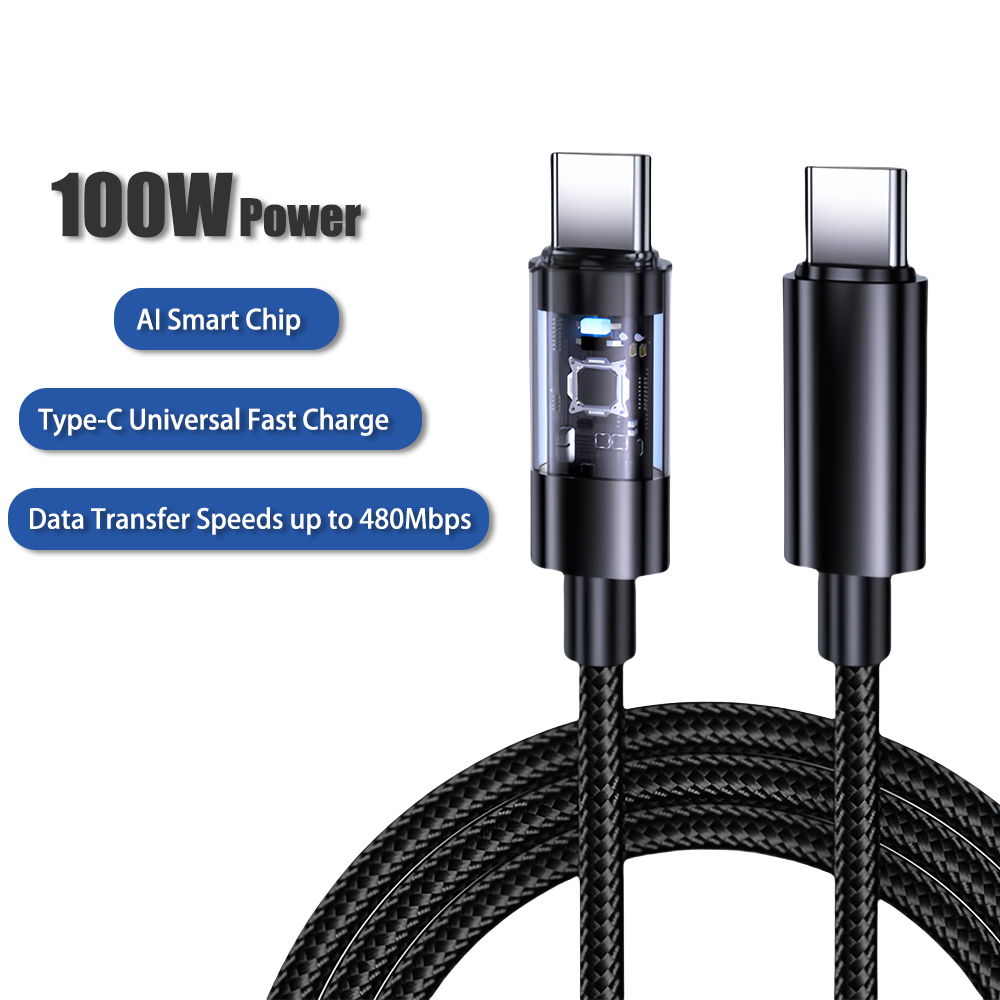
100W USB-C cables wholesale
Introduction: The Backbone of Digital Connectivity
The Universal Serial Bus (USB) standard has been the cornerstone of device interfacing for decades. From charging smartphones to connecting peripherals and transferring data, USB cables are ubiquitous. For wholesalers and suppliers, this represents a consistent and high-volume market opportunity. However, the landscape is fragmented. The evolution from the familiar USB-A to the once-dominant Micro-USB, and the current transition towards the powerful USB-C, alongside the unique position of Lightning, creates a complex matrix of consumer needs.
Success in the USB Cables wholesale market hinges on a strategic understanding of these connectors. It’s about knowing which cables are becoming obsolete, which are in sustained demand, and which represent the future of the industry. This knowledge informs inventory planning, marketing strategies, and partnerships with manufacturers for custom USB C cables wholesale programs, ensuring your business remains relevant and competitive in a fast-paced industry.
USB-A: The Universal Legacy Port
USB-A is the original “standard” USB connector that most people instantly recognize. Its wide, flat, and rectangular design with a single, non-reversible orientation has been the primary host port on computers, wall chargers, car adapters, and power banks for generations.
Technical Specifications and Common Uses
Form Factor: Non-reversible Type-A connector.
Typical Uses: Connecting peripherals (keyboards, mice, printers, external hard drives) to computers, and as the “source” end of virtually all charger blocks and power adapters.
Versions: It’s crucial to distinguish the connector (USB-A) from the protocol (USB 2.0, USB 3.0, etc.). A USB-A port can support various speeds:
USB 2.0 (Black/White Tab): Data transfer speeds up to 480 Mbps.
USB 3.0/+ (Blue Tab): Data transfer speeds up to 5 Gbps (USB 3.2 Gen 1).
USB 3.1/+ (Teal/Red Tab): Supports faster protocols, often with higher power delivery.
Market Position and Wholesale Strategy for USB-A Cables
Despite not being the modern port on new devices, USB-A is far from dead. Its role as the universal “source” connector in charging infrastructure guarantees its relevance for years to come. Most USB C cables wholesale offerings still feature a USB-A to USB-C model to serve this massive installed base.
Wholesale Recommendation: USB cables suppliers should maintain a robust inventory of high-quality USB-A to USB-C and USB-A to Micro-USB cables. These are high-turnover, essential items for a wide range of customers. They are the bread-and-butter of any wholesale operation and are often sought in bulk USB C cables purchases for corporate giveaways or as standard-issue accessories.
Micro-USB: The Former King of Android and Accessories
For nearly a decade, Micro-USB was the mandated charging port for most Android phones and a vast array of other devices, from Bluetooth speakers and power banks to smart home gadgets. Its compact, trapezoidal shape is unmistakable, notorious for its fragile design and frustrating non-reversibility.
Technical Specifications and Common Uses
Form Factor: Small, non-reversible, trapezoidal connector with two hooks on the sides.
Typical Uses: Budget and mid-range Android phones (decreasingly), Bluetooth accessories, power banks, e-readers (like older Kindles), and countless other low-power electronic devices.
Limitations: Physically fragile, slow charging capabilities (typically limited to 15W or less), and slow data transfer (usually USB 2.0).
Market Position and Wholesale Strategy for Micro-USB Cables
While Micro-USB is a legacy standard, its wholesale demand remains significant due to the enormous installed base of devices. The market for Micro-USB cables has shifted from premium to budget and replacement-driven. Customers are not looking for cutting-edge features but for affordable, durable cables to keep their older devices powered.
Wholesale Recommendation: USB cables suppliers should continue to stock Micro-USB cables, but consider them a cost-driven, volume-based product line. The focus should be on value and durability rather than high margins. These cables are essential for fulfilling the needs of budget retailers, hospitality industries (for guest charging), and as low-cost inclusions in accessory bundles. However, long-term inventory investments should be cautious, as this market will steadily decline.
USB C cables wholesale
Lightning: Apple’s Proprietary Ecosystem
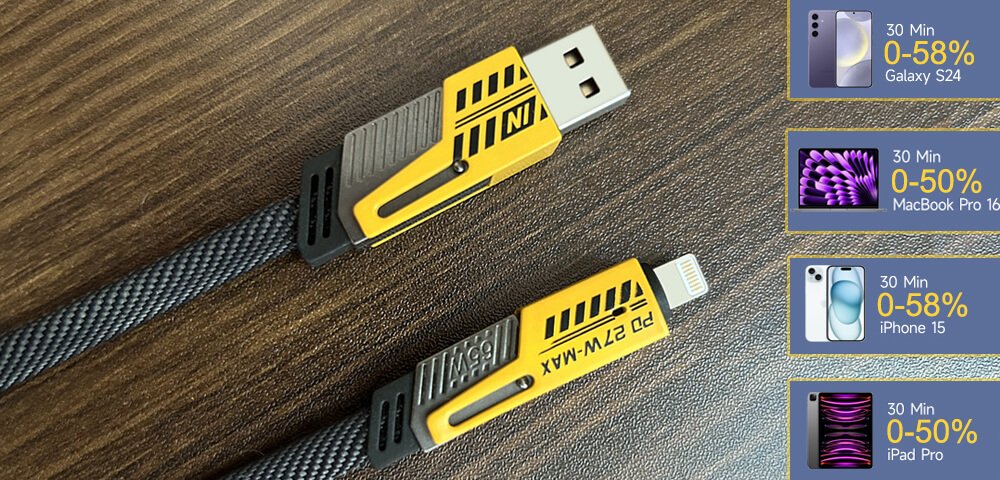
Introduced by Apple in 2012, the Lightning connector was a revolutionary step forward with its compact, fully reversible design. It replaced the larger, 30-pin dock connector and became the exclusive port for iPhones, iPads, iPods, and other Apple accessories for over a decade.
Technical Specifications and Common Uses
Form Factor: Compact, symmetrical, and fully reversible 8-pin connector.
Typical Uses: iPhones (iPhone 5 to iPhone 14), iPads (most models until 2018+), AirPods cases, and other Apple peripherals.
Limitations: As a proprietary standard, it requires Apple’s certification (MFi – Made for iPhone/iPad/iPod). Non-certified cables often trigger warning messages and may fail. Its technical capabilities are now outclassed by USB-C, with slower data transfer speeds (USB 2.0 on most cables) and lower power limits.
Market Position and Wholesale Strategy for Lightning Cables
The Lightning cable market is massive but strictly governed. For USB cables suppliers, dealing in Apple MFi Certified cables is non-negotiable. Selling non-certified cables leads to customer dissatisfaction, high return rates, and potential legal issues.
Wholesale Recommendation: Partner exclusively with manufacturers who provide verifiable MFi certification. The Apple user base is loyal and has consistent spending power, making this a high-value, high-margin segment. Offering a variety of durable, well-designed MFi Lightning cables—in various lengths, colors, and with reinforced connectors—is a proven strategy. This is also a prime category for custom USB C cables wholesale suppliers to offer dual-ended cables (e.g., USB-C to Lightning) that cater to users with newer MacBooks and iPad chargers.
USB-C: The True Universal Standard
USB-C is the modern, industry-standard connector designed to replace all previous USB types, including USB-A, USB-B, and Micro-USB. Its small, robust, and elegantly simple reversible design is only part of the story. Its true power lies in its incredible versatility.
Technical Specifications and Common Uses
Form Factor: Small, oval-shaped, and perfectly symmetrical (reversible).
Typical Uses: Modern Android phones, premium laptops (MacBooks, Dell XPS, etc.), tablets (including iPads Pro/Air), peripherals, monitors, and even some gaming consoles (Nintendo Switch).
Capabilities: This is where USB-C shines. It’s a single port that can handle:
Power Delivery (USB-PD): Supports charging from 5W up to 240W, capable of powering everything from earbuds to high-performance laptops.
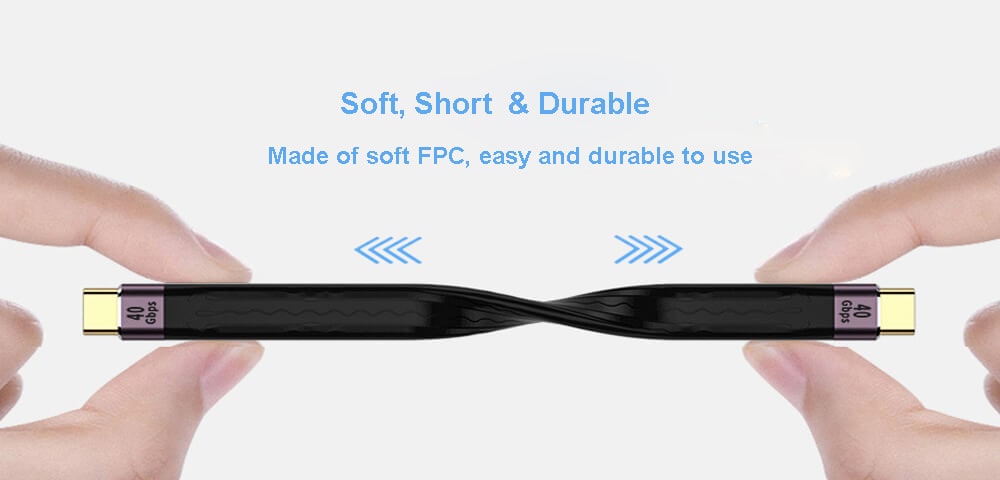
High-Speed Data: Supports USB 3.2 (up to 20 Gbps), USB4 (up to 40 Gbps), and Thunderbolt 3/4 (40 Gbps).
Video Output: Can output video to monitors via DisplayPort or HDMI Alt Modes, supporting resolutions up to 8K.
Market Position and Wholesale Strategy for USB-C Cables
USB-C is the present and future of connectivity. For USB cables suppliers, this is the most critical and dynamic product category. Demand for bulk USB C cables is exploding as the standard is adopted across all device categories.
Wholesale Recommendation: Your strategy should be multi-faceted:
Diversify by Capability: Stock different tiers of USB-C cables to meet different needs and price points.
Basic Charging Cables: For customers who just need to charge phones and tablets.
High-Speed Data Cables: Certified for USB 3.2 Gen 2 or higher speeds for users transferring large files.
High-Power Charging Cables: Supporting 100W PD for laptop users.
Premium/Thunderbolt 4 Cables: For professionals requiring maximum performance for data and video.
Embrace Customization: The custom USB C cables wholesale market is a major growth area. Businesses, schools, and promotional companies seek cables with custom lengths, colors, and printed logos. Offering this service positions you as a value-added supplier.
Future-Proof Your Inventory: As the EU mandates USB-C as a universal charging standard and Apple continues its transition, prioritizing USB-C cable inventory is the safest long-term bet for any wholesaler.
Head-to-Head Comparison Table for Wholesale Buyers
| Feature | USB-A | Micro-USB | Lightning | USB-C |
|---|---|---|---|---|
| Reversible? | No | No | Yes | Yes |
| Durability | High | Low (fragile port) | Medium | High |
| Peak Data Speed | 10-20 Gbps* | 480 Mbps | 480 Mbps (5 Gbps on Pro) | 40-80 Gbps |
| Peak Power | ~7.5W-100W | ~15W | ~15W-30W | Up to 240W |
| Video Output | No | No | No (Adapter needed) | Yes (Native) |
| Ecosystem | Universal, Legacy | Legacy Android/Accessories | Apple Proprietary (MFi) | Universal Standard |
| Wholesale Focus | High-volume, essential | Budget, replacement | High-margin, MFi Certified | Future-proof, diversified tiers |
| Customization Potential | Low | Low | Medium (with MFi) | Very High |
*Depending on USB version (2.0, 3.0, 3.2)
Building a Winning Wholesale USB Cable Strategy
1. Portfolio Diversification is Key
A successful USB cables wholesale business cannot rely on a single connector type. Your portfolio must be a balanced mix:
Legacy & Volume: Maintain stock of reliable USB-A and Micro-USB cables.
High-Margin Niche: Capitalize on the Apple ecosystem with certified Lightning cables.
Future Growth Driver: Aggressively expand your USB-C offerings across all performance tiers.
2. The Critical Importance of Quality and Compliance
Cutting corners on quality is a race to the bottom. Poorly constructed cables with substandard wires and shielding lead to slow charging, data corruption, and safety hazards. For USB cables suppliers, building a reputation for reliability is paramount. This means:
Sourcing from reputable manufacturers.
Insisting on proper certifications (USB-IF, MFi).
Using high-quality copper wiring and robust connector housings.
3. Capitalizing on the Customization Trend
The market for generic cables is crowded. Offering custom USB C cables wholesale services provides a significant competitive advantage. This allows you to serve B2B clients directly, creating branded cables for corporate events, retail branding, and specialized applications. This segment commands higher margins and fosters long-term business relationships.
4. Understanding the “Cable Tangle” – Versatility Matters
Stocking and promoting versatile cable solutions can be highly profitable. Consider:
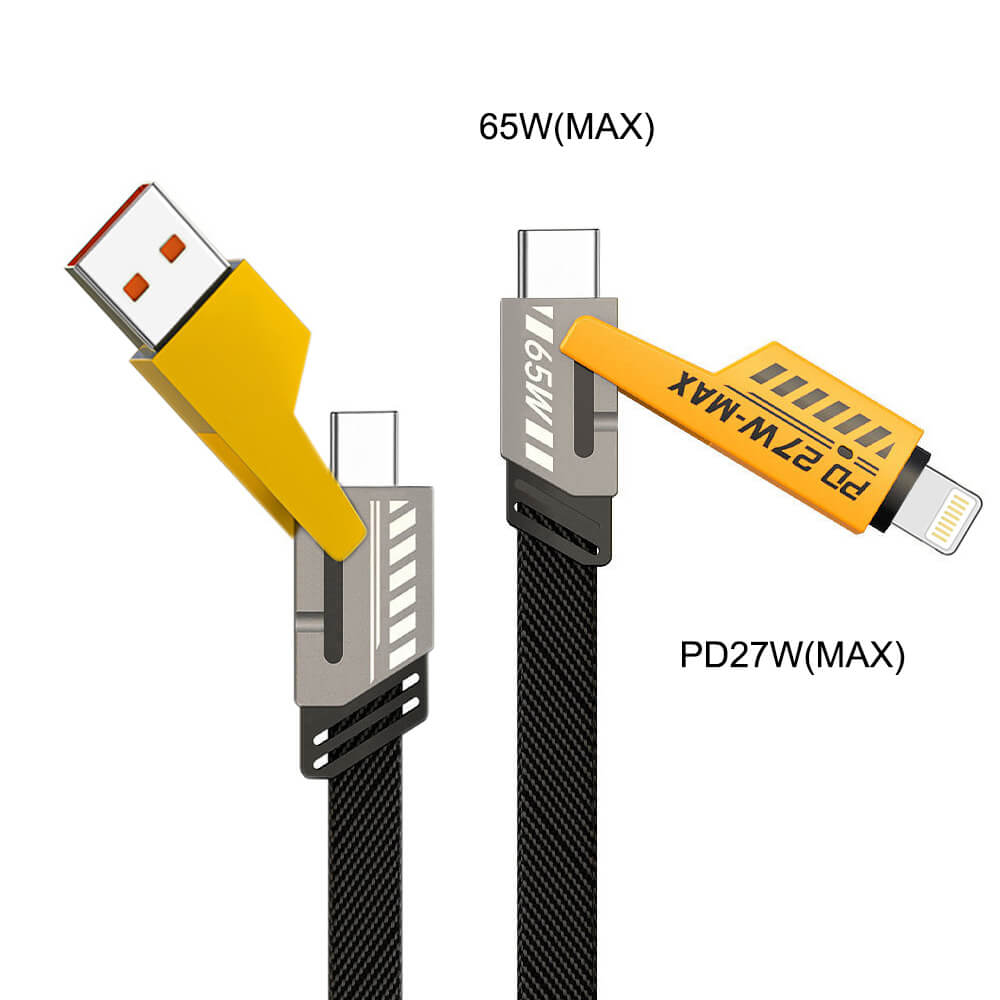
Multi-Port Cables: A single cable with interchangeable USB-C, Lightning, and Micro-USB heads.
Dual-Ended Cables: Such as USB-C to Lightning, which are increasingly popular.
Cables with Multiple Connectors: Bundled sets that cover all a user’s needs.
Conclusion: Navigating the Connector Landscape for Long-Term Success
The evolution from USB-A and Micro-USB to USB-C and the unique case of Lightning tells a story of technological progress towards a simpler, more powerful universal standard. For wholesalers and suppliers, this transition is not without its challenges, but it is filled with immense opportunity.
The key takeaway is that while legacy cables will remain a part of your inventory for the foreseeable future, your strategic focus must be on USB-C. Investing in a diverse range of bulk USB C cables, from basic to high-performance, and developing a strong custom USB C cables wholesale operation, is the definitive path to growth and resilience. By understanding the technical nuances, market dynamics, and quality imperatives of each connector type, your business can effectively serve the entire market—from those clinging to older devices to the early adopters driving the future—ensuring your position as a leading USB cables supplier in a connected world.