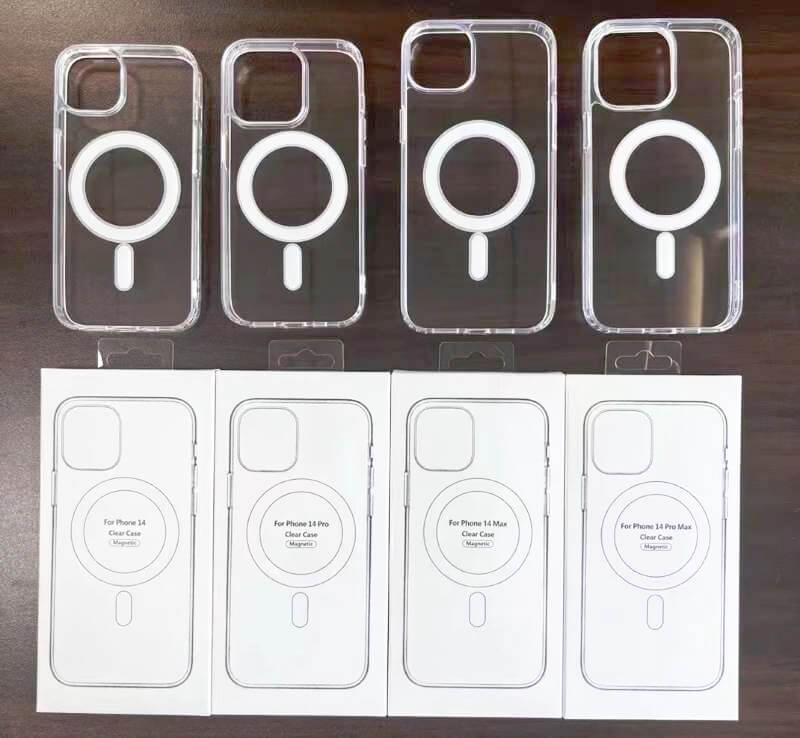
iPhone 14 Glass Screen Protector

iPhone 14 glass screen protector was released for wholesale. Welcome global iPhone accessories wholesalers contact us for details.

iPhone 14 series glass screen protectors are available for the following models-

  • iPhone 14
  • iPhone 14 Pro
  • iPhone 14 Plus
  • iPhone 14 Pro Max

Welcome to contact us for the iPhone Accessories, parts and repair tools wholesale. Contact Lider now.

iPhone 14 Glass Screen Protector Wholesale

iPhone 14 Glass Screen Protector Wholesale

Phone Charger Safety: 7 Warning Signs You Must Replace Your Charger Immediately

In our connected world, the humble phone charger is a lifeline. We use it daily, often without a second thought. Yet, this unassuming accessory sits at a dangerous crossroads: it manages high-voltage AC electricity from your wall outlet and converts it to lower-voltage DC power for your expensive smartphone. A faulty charger isn’t just an inconvenience; it’s a potential hazard to both your device and your personal safety.

Many people hold onto chargers for years, treating them as immortal companions to their ever-upgrading phones. However, chargers have a lifespan and can degrade or become dangerously incompatible. Using a compromised charger can lead to slow charging, permanent battery damage, electrical shocks, or even fires.

How do you know when to replace it? Don’t wait for a spark or a dead phone. Here are the seven critical warning signs that your phone charger needs to be replaced immediately.

1. The Loose or Wobbly Connector

This is one of the most common and hazardous issues.

  • The Problem: The plug that connects to your phone’s port becomes loose, doesn’t “click” in securely, or requires constant adjusting to maintain a charge.

  • The Risk: A loose connection creates intermittent contact. This causes tiny electrical arcs each time the connection flickers, generating excess heat at the metal contacts. Over time, this can:

    • Melt the port: Damage your phone’s internal charging port, leading to costly repairs.

    • Cause electrical shocks: Exposed, frayed, or broken metal parts inside the connector can touch the user.

    • Start a fire: The high resistance at the point of poor contact generates significant heat, which can melt plastics and ignite nearby materials.

  • The Verdict: A loose connector is a definitive failure point. Replace the cable (if the issue is with the USB end) or the entire charger immediately.

2. Physical Damage: Cracks, Frays, and Crushes

Inspect both the charger body (the “brick”) and the cable regularly.

  • The Problem: Visible damage to the housing, a bent AC plug, a frayed or split cable exposing wires, or kinks that feel unusually stiff.

  • The Risk: Compromised insulation exposes internal wires to air, moisture, and touch. This dramatically increases the risk of:

    • Short circuits: Leading to sparks inside the charger brick.

    • Electric shock: Direct exposure of live wires.

    • Component failure: A damaged housing can let dust and moisture in, corroding internal components.

  • The Verdict: Electrical insulation is your primary safety barrier. If it’s broken, the charger is unsafe. Do not use tape as a permanent fix.

3. Signs of Overheating or Burn Marks

Your charger should never be too hot to touch comfortably.

  • The Problem: The charger brick or the plug head becomes uncomfortably or alarmingly hot during use. Look for discoloration, melting, or brown/black burn marks on the charger or the wall socket.

  • The Risk: Excessive heat is a symptom of failing components, overload, or poor internal connections. It is the direct precursor to:

    • Component failure: Capacitors and transformers can burst.

    • Fire: The heat can ignite the charger’s plastic housing or nearby curtains, papers, or bedding.

  • The Verdict: Unplug a hot charger immediately and let it cool in a safe, non-flammable area. Do not reuse it. This is a severe red flag.

4. Corrosion and Moisture Damage

Chargers used in bathrooms, kitchens, or during travel are susceptible.

  • The Problem: Rust or greenish corrosion on the metal AC pins, or moisture/debris inside the USB port of the charger.

  • The Risk: Corrosion increases electrical resistance, leading to the same overheating risks as a loose connection. Moisture inside the unit can cause a short circuit across high-voltage components, potentially leading to:

    • Explosive failure: Vaporized moisture can rupture the charger casing.

    • Electrocution risk: Water provides a path for electricity to the outer shell.

  • The Verdict: Corrosion is degenerative and will only worsen. A charger with rusty pins or suspected internal moisture damage should be discarded.

5. Incompatible or Grossly Underpowered Specifications

Using an ancient charger with a modern phone is a recipe for problems.

  • The Problem: Using an old 5V/1A (5-watt) charger with a phone designed for 18W, 30W, or 65W fast charging. The phone charges painfully slowly.

  • The Risk: While your phone will typically draw only what it needs, the strain is on the charger. An old, low-power charger running continuously at its maximum output for 4-6 hours to charge a large modern battery is pushed to its thermal limits. This sustained stress can:

    • Degrade the charger: Cause its components to fail prematurely from constant operation.

    • Create heat buildup: Leading to the overheating risks mentioned above.

  • The Analogy: It’s like asking a compact car engine to continuously tow a heavy trailer at its maximum RPM. It will work for a while, but the engine will overheat and fail much sooner.

  • The Verdict: For battery health and safety, use a charger that meets or reasonably exceeds your phone’s standard charging requirements. It doesn’t have to be the fastest, but it shouldn’t be a relic.

6. The Mystery of the Knock-Off or Ultra-Cheap Charger

If the price seems too good to be true, the safety probably is.

  • The Problem: A charger purchased from an unofficial vendor, a street market, or an obscure online retailer at a fraction of the brand-name price. It may feel unusually light.

  • The Risk: These chargers often cut every possible corner. They lack critical safety components like proper fuses, surge protection, and isolation between high and low-voltage sections. Investigations have shown they may use substandard materials, inadequate insulation, and faulty soldering.

    • No Protection Circuits: They can deliver erratic voltage, “dirty” power with electrical noise, or even send a voltage surge directly to your phone’s battery management system.

    • Slow Battery Murder: They can degrade your phone’s battery health over time through inconsistent charging.

  • The Verdict: Invest in chargers from reputable brands (phone manufacturer, Anker, UGREEN, Belkin, etc.). The cost is an investment in the safety of your $1,000 phone and your home.

Replace Your Phone Charger

Replace Your Phone Charger


7. Intermittent Functionality and “Ghost” Charging

The charger only works at a specific angle or randomly starts/stops charging.

  • The Problem: The charger is unreliable, requiring you to jiggle the cable or plug to initiate charging.

  • The Risk: This is a clear sign of an internal break or a failing connection. It shares the same risks as a loose connector—arcing, heat, and potential for short circuits. It also indicates the charger is at the end of its functional life.

  • The Verdict: Reliability is key. An unreliable charger is a failing charger. Replace it before it fails completely or fails dangerously.

Proactive Charger Care and Replacement Strategy

  • Buy Smart: Stick to well-known brands. Look for safety certifications (like UL, CE, or FCC marks) on the charger itself.

  • Handle with Care: Don’t yank the cable from the plug; pull from the sturdy connector head. Avoid tight bends, especially near the ends.

  • Inspect Regularly: Make a quick visual and tactile inspection part of your routine when you plug in your phone.

  • When in Doubt, Throw it Out: Chargers are relatively inexpensive. The potential cost of a fire, a severe shock, or a destroyed smartphone dwarfs the price of a new, safe charger.

Your phone charger is a vital piece of safety equipment. By recognizing these seven warning signs—loose connectors, physical damage, overheating, corrosion, incompatibility, poor origins, and intermittent operation—you can take proactive steps to protect your devices, your home, and most importantly, yourself. Don’t let a $20 accessory risk everything. Replace it wisely and charge with confidence.

What is the Best Travel Charger? Words from a manufacturer

Travel Chargers are essential when we use Mobile Phones and Electronic devices in our dailly life. As the files are bigger and bigger, films and videos are longer and longer, even our talk by free software are not so tight to finish…These will cause a serious problem for the batteries. We need a good travel charger to refill the batteries. 

Most of us will use a power bank to extend the mobile phone battery life. What is the result if we are on travel and the power bank is going to be out? 

Yes! We need a mobile phone charger for smart phones or electronics. Let us see what is a good travel charger from eye of both as a travel charger user and home charger manufacturer for cell phones. 

Multi Ports USB Charger

1. Travel Charger Provides Quick Charge to Smart Phones

Nobody wants to wait 6 hours or more to get a full charge to 100% for your cell phone. This only happened years ago. As the time goes, quick charger make phone charge simple. 30 mins to charge your phone to 50% or more and an hour to finish. It is exciting, isn’t it? 

These are the right phone chargers we want – Charge rapidly and last long. Importantly, the phone charger will not harm your cell phone batteries while offer efficience. 

Now almost all smart phone brand carriers as Samsung, Huawei, Mi, Apple will take quick charge technology in the phone charging system.

2. Travel charger with Multi Ports Outlet for Different Smart Phones or Devices

We would carry a lot of chargers to travel from one place to another 2-3 years ago, like Chargers for smart phones, cameras, power banks, e-readers, notebooks, drones and more with different charge cables. 

Now thinngs are going simple. You just carry 1-2 chargers with 3 ports outlet and they can take care of your full charge system for all devices. 

Travel chargers with dual port, 3 ports or even. more will make things easier. This reduces the travel weight for luggages. And many of the devices share the same cable for charge and data, like the type c may fit for notebooks, cameras, gopros or cell phones. Forget a bunch of cables but with serveral good one. 

3. Protection for Safety

The safety is greatly improved as the PCB and IC technology go. The PCB, IC and other components improved to reduce the weight and cube of a charger. And it will provide more firewalls for safety. 

A good phone charger with well-designed PCB is perfect.  How can a normal user know it is well-designed? Here goes your question. 

My answer is simple. You can buy original or famous brand moible phone chargers. 

There would go your anothe question again. There are many styles with high and low prices, how can I select the best one?

Select the style and ports you need. DO CHECK the safety approval if it meet your counrtry standards as CE, UL and so on. If all with safety approval, take the cheepest one with your desired looking, 

90-250V international Input

4. Travel Charger Suitable for 90-250V Ineternational Input

There are several options for voltage inputs. 

US is with 110V input. And China is with 220V input. So 90-120V would mostly designed for 110V input phone chargers. So 200-250V for 220V mobile chargers. 

Not all phone chargers are suitable for US AND China input. This means, US input mobile phone chargers may not use in China because it is 110V input. It will explode if we put that charger in China hotels for charge. That is really a problem. 

So we select a charger with 90-250V input. With this one, we can travel globally without any input converter. 

5. Full Protocols to meet Apple, Huawei, Samsung or more Phones

The days have passed when a mobile phone must have its own original travel charger. Neither do with cameras or notebooks.

As the phone connectors are in standard port, it is much easier for phone carriers. A type C cable may suit for most of the new android phones, notebooks or tablets. We carry less and less charge cables when we travel because the connectors are becaming the same. 

How about the chargers? 5V, 9V, 12V or 20V input? They can do as the cables? The answer is yes! Now PD chargers or QC chargers are with adjustable output voltage. The travel charger (actually car chargers can do the same) will communicate with chip inside phones or notebook. then make the max output of power to ensure a rapid charge. 

The phone accepts 5V 2A or 9V 2A. And the travel charger can offer 5V 2.4A, 9V 2A, 12V 2A or 20V 2.5A. The travel charger will communicate with phone brain to see the max voltage and currency. The phone gets back with 9V 2A. Thus they shake hands and make no problem. 

We have QC, PD or each of the protocols for each mobile manufacturer or phone band carriers. No worry. That could be conbined in one single charger! A charger can fit for iPhone 13, Samsung S21, Huawei Mate 40 or even the Macbook air!

This will reduce a large amount travel chargers when at home, in office or travel. 

6. Travel Chargers with Compact size

Size for travel charger is really a big problem when out of office or home. large size always means heavy weight. 

We cannot imagine carrying a luggage with half of heavy chargers for Cameras, Phones, notebooks, tablets, watches and more. 

Why not solve this with 2-3 good travel chargers with 3 ports out each? And carry one with a compact size and light weight. 

7. Travel Chargers with Changeable / Replaceable Pin Plugs

The pin plugs are different when travel to Europe, UK, China. If we travel to different countries, the pin plug is also a problem. I am sure we will take 1-2 travel converter to make the right pin plugs compatible with the destination country. But if the charger is equipped with  simple multi pins. This will reduce the weight a lot. 

8. Different Ports output for the travel charger- Type C, USB A

Most of the phone chargers are with USB C out. Some are with USB A output for the travel chargers. 

65W Multi Protocol Charger with Changeable Plugs

9. Max Power Watts to Charge Notebooks

It is true now a simple Gna charger can charge Macbook Pro with 120W output with 3 ports. 2 Type C output and 1 normal USB A output. 

How Many Machines You Need for Mobile Screen Repair or Refurbish?

Let’s check them and make your repair business easy.

How many machines you need for mobile screen repair or refurbish? How to repair the big screens like Apple iPad, Samsung or other tablets? What machines I need for my repair shop? … You may have too many questions regarding phone or tablet screen repair.  Let us check them.

Steps we need for replacement of the broken mobile phone screen and fix it – 

  • We have to take out the bad screen and get ride of the glue;
  • We have to put glue and the new glass or touch.

Full Mobile LCD screen Repair Process in details as below:

  • Separate the bad glass from the LCD screen;
  • Get rid of the glue;
  • Put the new glue on the old LCD;
  • Put on the new glass;
  • Press that and make it bulb free;
  • Test that and finish.

So, we need all mobile phone LCD screen repair machines I suggest you to take as below:

  1. Frozen LCD separator machine – It can be used for both plain LCD screen as iPhone and Curved LCDs as samsung Galaxy S6 Edge. Please note that, the curved LCD screen machine cannot be separated by heating as Apple iPhone LCD Screen was done. It will damage the LCD! But this frozen LCD machine would be good enough for both plain and curved.
  2. Big screen separator – This LCD screen separator can repair up to 14 inch screens as iPad series and Samsung tablet series. It can also be used for small screens as iPhone. So, it is an ideal machine for regular plain screen repair.
  3. 3-in-1 curved touch screen film machine: It is used for the LCD Screens with curved edge.
  4. Laminating machine – It is for bubble free and vacamm.
  5. Manual 5-in-1 machine – It is for Samsung series frame removal and assembly.

With these LCD screen machines, you can repair up to 98% of the LCD screens available in the market. The repair business for the LCD screens will bring you even more profit and revenue in your mobile phone accessories and repair business.

Need more information on the mobile phone or tablet screen repair machines? Contact Lider now and we will get back to you with the prices and sample info.